
Belize tourism in 2026 is no longer a post-pandemic recovery story. It is a growth story.
While much of the global travel industry is navigating headwinds including rising airfares, shifting consumer priorities, and economic uncertainty in key source markets, Belize is quietly posting some of the strongest tourism numbers in its history. The data coming out of the first quarter of 2026 tells a story of structural expansion rather than cyclical rebound, and the implications for investors in Belizean real estate and hospitality assets are significant.
The Numbers That Matter
The Belize Tourism Board recorded 187,290 overnight visitor arrivals in the first quarter of 2026 alone. January brought 59,164 arrivals, February held steady at 59,231, and March surged to 68,895, a 5.7 percent increase over March 2025. Year-over-year overnight arrival growth for Q1 2026 came in at 2.1 percent, building on the 0.8 percent growth recorded across all of 2025.
These numbers matter because they sit on top of an already exceptional 2024 baseline. Total visitor figures in 2024 exceeded 1.4 million when overnight and cruise arrivals are combined, the strongest year on record. Overnight visitors alone reached approximately 550,000 to 560,000, surpassing pre-pandemic 2019 figures by double digits. March 2024 was the single busiest month ever recorded for Belize overnight tourism with more than 69,000 arrivals.
The fact that 2026 is continuing to grow on top of that record foundation is the key signal. This is not a market that spiked and corrected. It is a market that is maturing into a sustained growth phase.

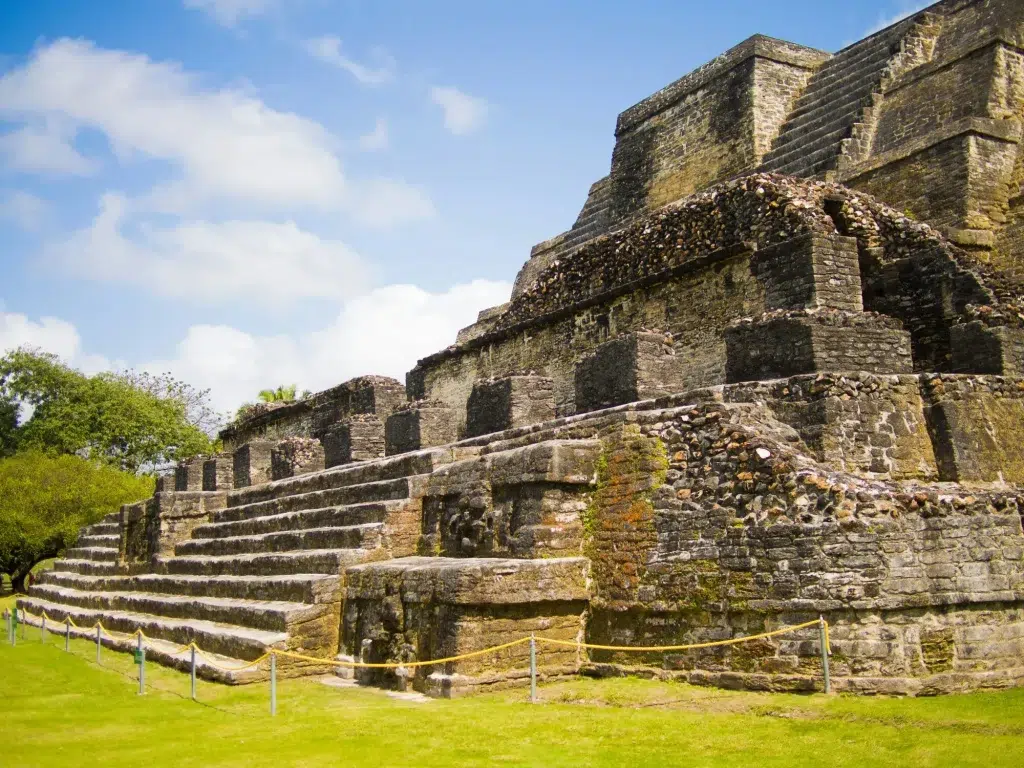
Placement note Place this image directly after the paragraph above before the Market Diversification heading It supports the Q1 data being discussed
Market Diversification Is Reducing Risk
One of the most encouraging developments in Belize’s 2026 tourism data is not the headline growth number. It is what is happening below the surface in terms of source market diversification.
The United States remains dominant, accounting for approximately 70 percent of March 2026 overnight arrivals, which is consistent with historical patterns. But Canadian arrivals surged by nearly 29 percent in the quarter, and European visitor numbers rose 2.4 percent. These shifts reflect Belize’s expanding international profile and, more importantly, reduce the country’s vulnerability to a downturn in any single source market.
For real estate investors, market diversification in tourism source markets is a meaningful risk reduction signal. A hospitality asset or vacation rental property in a market dependent on a single nationality of visitor is inherently more fragile than one drawing from a broad international base. Belize is moving in the right direction on this metric.
Air Connectivity Is the Infrastructure Behind the Numbers
Tourism growth does not happen in isolation. It requires infrastructure, and the most important infrastructure for Belize is air connectivity.
Philip Goldson International Airport is currently operating at its highest capacity on record, handling approximately 105 international arrivals per week across direct routes from 20 major cities. Seattle, Los Angeles, New York JFK, Toronto, and Calgary are all now served by direct flights operated by Alaska, American, Delta, JetBlue, United, and WestJet. Connections through Panama City (PTY) are also supporting inbound traffic from Latin America and Europe.
The airline connectivity and destination investment correlation analysis produced by Dustin Rennie demonstrates a direct relationship between increased direct flight capacity and real estate investment activity in Belize. As more routes open and more travelers experience Belize directly, the pipeline of potential property buyers and investors grows.
What This Means for the Belize Economy
Tourism is not a peripheral contributor to the Belizean economy. It is the backbone of it. The IMF estimates that tourism directly contributes approximately 12 percent of GDP, with indirect contributions pushing the total closer to 40 percent when spillover effects into agriculture, construction, retail, fisheries, and transportation are included. The sector directly supports around 35,000 jobs, making it the country’s single largest source of formal employment.
This economic centrality has important implications for investors. A market where tourism is the primary economic engine is a market where government policy, infrastructure investment, and institutional attention are all aligned around protecting and growing that sector. The Belize Tourism Board and the Ministry of Finance have both signaled continued prioritization of tourism infrastructure, airlift development, and visitor experience improvements as central government priorities through 2027.
The Cruise Segment and Stopover Balance
It is worth noting that not all of Belize’s tourism numbers are moving uniformly upward. Cruise visitor figures in early 2026 showed a slight decline of 2.7 percent year-over-year compared to March 2025. This is not a concerning signal. In fact for investors in Belizean hospitality and real estate assets it is arguably a positive one.
Cruise visitors generate limited economic benefit relative to overnight stopover visitors. They spend a fraction of the per-capita amount that overnight guests contribute to local restaurants, tour operators, accommodation providers, and retail businesses. The simultaneous growth in overnight arrivals and modest decline in cruise figures reflects a market that is naturally tilting toward higher-value, longer-duration tourism. That is exactly the direction that Belize’s low-density luxury positioning strategy is designed to encourage.
Investment Takeaway
The 2026 tourism data for Belize provides meaningful support for the investment thesis that Dustin Rennie and Bayne Consultancy have been articulating for the Belizean market.
Rising overnight arrivals, improving source market diversification, record air connectivity, strong GDP contribution, and a government policy environment aligned with continued tourism growth all point in the same direction. Belize is entering a more mature phase of tourism-driven economic expansion, and the real estate and hospitality assets that benefit most from sustained demand growth are precisely those that experienced investors have been quietly accumulating over the past several years.
For investors evaluating entry points into the Belize market, the 2026 tourism data removes one of the most common objections, which is uncertainty about whether demand is real and durable. It is. And the data is now available to prove it.
For related market intelligence, explore the full Belize investment overview and the Belize market reports library.

